
This post may contain affiliate links. If you buy through one, we may earn a commission at no extra cost to you. See our Affiliate Disclosure for details.
The phone rings at 2:40 in the afternoon while both your hands are busy. You glance at the screen, decide the number can wait ninety seconds, and by the time you are free it has stopped. No voicemail. You call back at six. It rings out. You try again the next morning and someone says, politely, that they went with somebody else.
Nothing about that exchange was a service failure. You were working. That is the whole problem with a one-person phone line: the busier the business gets, the less able it is to answer the thing that brings in business.
An AI phone answering service picks up on the first ring, holds a spoken conversation, and hands you a written summary of who called and why — which is more than voicemail does and cheaper than a staffed answering service. It suits high-volume, repetitive inbound calls: opening hours, availability, “do you cover my area”, basic booking. It suits complex, emotional, or price-sensitive calls much less well, because a confident wrong answer on a phone call is worse than no answer at all. The deciding factor is not the voice quality, which is now good across the category. It is whether you have written down what the correct answers are, and whether the handoff to a human is fast enough to catch the calls the machine should not be taking.
What a missed call actually costs
A missed email is deferred. A missed call is usually decided.
That asymmetry is the entire argument for doing anything about this. Someone who emails you has, by the act of typing, already accepted a wait. Someone who phones has a question they want answered now, often with your competitor's number open in another tab. When nobody picks up, plenty of those callers move on to the next result rather than leaving a message — partly because leaving one now feels like a slower route to an answer than simply dialling somebody else.
So the real cost is not the call. It is that you never learn it happened, or you learn from a blank entry in a call log three days later with no name attached to it.
There is a second cost that is easier to overlook. Calls you do answer interrupt work that was paying you at the time. Fifteen calls a week, five minutes each including the cost of losing your thread and finding it again, is not fifteen minutes of your week. Anyone who has tried to do detailed work with a phone on the desk knows the number is considerably worse than the arithmetic suggests.
Three ways to cover a phone, and what each really is
The category gets discussed as though the choice is between "AI" and "not AI." It is closer to a choice between three different trades.
| Option | Answers on the first ring | Takes details or books | Main failure mode |
|---|---|---|---|
| Voicemail with transcription | No — after the ring-out | No | Most callers hang up rather than leave one |
| Human answering service | Usually | Yes | Cost scales directly with call volume |
| AI voice agent | Yes | Yes, if wired to your calendar | Answers confidently when it should not |
Voicemail with transcription
The cheapest fix, and worth ruling in or out first because you may already own it. Modern mobile carriers and business phone apps will transcribe a voicemail into text and push it to you, which turns "listen to five messages" into "scan five messages in twenty seconds."
What it cannot do is stop the hang-up. The caller still hears ringing, still hears a recorded greeting, and still has to decide that you are worth ninety seconds of talking to a machine. Many will not.
A human answering service
Staffed receptionist companies have been doing this for decades. Firms like Ruby and Smith.ai answer in your business's name, take a message, screen out sales calls, and in some configurations book appointments directly.
The advantage is judgment. A person hears that the caller is upset, or confused, or describing something unusual, and adapts. Nothing in the AI category matches that yet. The constraint is arithmetic: you are buying human minutes, so the bill tracks your call volume closely, and a spike in calls is a spike in cost.
An AI voice agent
This is the newer option and the reason the category is worth revisiting. Speech recognition, a language model, and synthetic speech are chained together so the caller has an actual back-and-forth conversation rather than pressing 1 for a menu. Platforms such as Synthflow package this for non-technical operators; the underlying voice and telephony layers come from providers like ElevenLabs and Twilio, which you can also assemble yourself if you are technical and want to.
Two things changed recently enough to matter. The voices stopped sounding like voices from a machine, and the response gap shrank far enough that callers stop talking over the agent. Neither was true a few years ago, and both are why this stopped being a novelty.

The call you are already on is the reason the next one goes unanswered. Photo via Pexels.
Four things decide whether it sounds competent
Vendor demos all sound impressive, because a demo is a scripted call. What separates a useful deployment from an embarrassing one comes down to four settings, and only one of them is about the AI.
What it knows. The agent answers from source material you supply — services, coverage area, hours, what you do not do. Give it three vague sentences and it will improvise around the gaps, which is precisely the behaviour you do not want on a phone call. This is the same dependency that decides whether a chat widget is useful, and the reason a written knowledge base is the actual prerequisite rather than an optional extra. An afternoon spent writing your twenty most common answers does more for call quality than any model upgrade.
When it stops. The handoff rule is the most important line in the configuration and the one most people leave on the default. Decide in advance what triggers a transfer to your phone or a callback promise: a complaint, a request for a firm quote, anything the agent has already failed to answer once. An agent that transfers slightly too eagerly is a mild annoyance. One that never transfers will eventually tell a caller something untrue.
What it does afterwards. A summary in your inbox is the minimum. Better is a booking written into your calendar during the call, so the caller hangs up with a confirmed time — which requires the agent to be connected to whatever scheduling setup you already run rather than sitting beside it.
How it behaves when interrupted. Real callers talk over each other, change their minds mid-sentence, and read out a postcode with a dog barking in the background. Handling that gracefully is the difference between a call that feels normal and one that feels like a fight with a menu system. It is also the one thing you cannot judge from a vendor's demo video, because their demo caller never interrupts.
Where these still fall down
Worth being blunt about, because the failure modes are specific rather than general.
Numbers and spellings are the perennial one. Names, street numbers, email addresses and reference codes get mangled by transcription in ways that produce a plausible-looking wrong answer rather than an obvious blank. Any agent taking down contact details should be reading them back and confirming.
Quoting a price is the dangerous one. If your pricing genuinely depends on inspecting something, an agent that gives a number to be helpful has just made a commitment on your behalf. The instruction to give ranges only — or to defer entirely — belongs in the configuration on day one, not after the first awkward call.
Emotional calls are the other clear boundary. A caller who is angry, distressed, or dealing with something urgent needs a person, and needs one quickly. This is the same line that separates a chatbot from a canned autoresponder in written support, and the reasoning in that comparison transfers to voice almost unchanged, except that the stakes are higher because the caller cannot see that they are being handled by software unless you tell them.
On cost, the honest answer is that this article should not be the source. Pricing in this category is metered several different ways — per minute of conversation, per call handled, per month with an included allowance — and the units matter more than the headline figure, in exactly the way billing units decide the real cost of an automation platform. Whatever numbers were accurate when this was written in August 2026 will have drifted. Read the pricing page on each vendor's own site, work out which unit you are buying, then multiply by your actual call volume from last month rather than your impression of it.
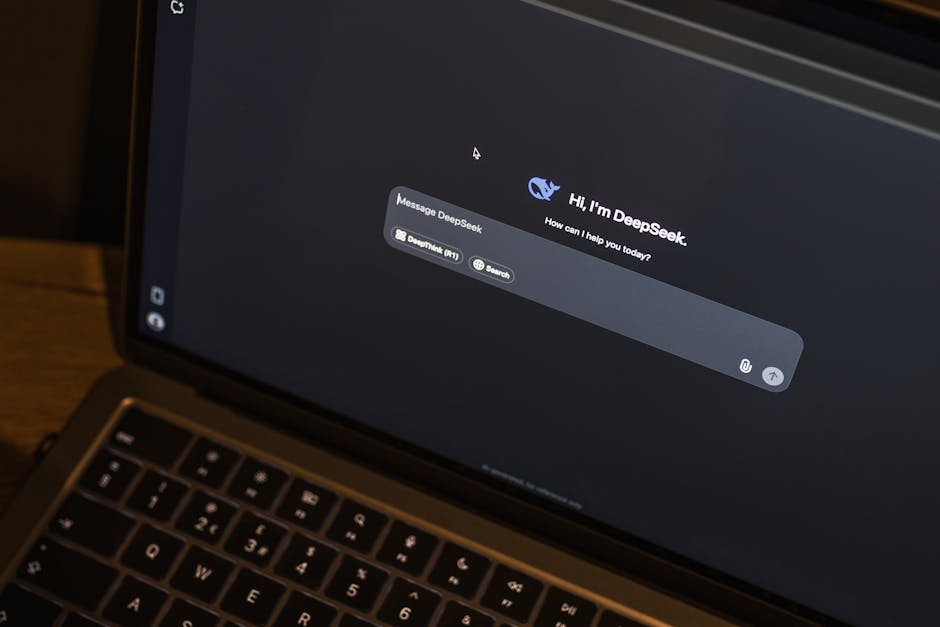
The agent is only as good as the answers you wrote down for it. Photo via Pexels.
The disclosure part people skip
Two rules sit around this that are easy to miss because they arrive from different directions.
The first is telling callers. Whether or not your jurisdiction currently compels it, an agent that opens by identifying itself as an automated assistant costs you very little and removes the worst outcome in the category — a customer who realises halfway through that they have been talking to software and feels tricked. Regulators have been tightening rules around synthetic voices on phone lines, and the direction of travel across bodies like the FCC is toward more disclosure rather than less. Getting ahead of that is free.
The second is recording. Call recording consent requirements vary by country and, within the United States, by state — some require only one party to consent, others require all of them. If you switch recording on for training or transcription, check what applies where your callers are, not just where you are. This is a genuinely local legal question and worth thirty minutes of checking rather than a guess.
Call your own number this week
Before you sign up for anything, do the diagnostic, because it takes ten minutes and it decides whether you need any of this.
From a phone that is not yours, call your own business line at the busiest point in your day — the moment you would genuinely not pick up. Let it do whatever it currently does. Listen to the greeting the way a stranger would. Then look at your call log for the past fourteen days and count two numbers: how many calls you did not answer, and how many of those you never called back.
If that second number is zero, you do not have a problem worth spending money on, and you can close this tab. If it is more than two or three, you have found the leak, and you now know its size well enough to judge whether an AI phone answering service, a staffed one, or simply a better voicemail greeting is the proportionate fix.

저는 한국에서 직원 없이 혼자서 두 개의 소규모 사업체를 운영하고 있습니다. 견적, 회계, 마케팅, 웹사이트 관리까지 모두 제가 직접 하고 있습니다. 개발자는 아니지만, 이 사이트의 자동화 시스템은 AI 코딩 도우미를 활용하여 밤늦게까지 오랜 시간 공들여 구축했고, 모든 콘텐츠 관리 및 게시도 제가 직접 담당하고 있습니다.